Cleveland’s subsurface is a direct legacy of the Wisconsin glaciation. The Cuyahoga River valley and adjacent uplands hide a complex stratigraphy: stiff to hard glacial tills, soft lacustrine silts, and pockets of man‑made fill from a century of industrial redevelopment. Groundwater often sits within 10 feet of grade along the Lake Erie Plain, and seasonal saturation cycles accelerate strength loss in overconsolidated clays. A soil mechanics study here cannot rely on regional defaults alone — it requires project‑specific sampling, index testing, and shear strength evaluation to match the IBC 1604.3 and ASCE 7‑22 site classification requirements. When boreholes encounter mixed‑fill layers, combining grain‑size analysis with Atterberg limits helps separate natural deposits from uncontrolled backfill, which often contains slag, brick, and dredge spoils typical of the Flats industrial zone.
Glacial till in Cleveland can exceed 4,000 psf undrained shear strength — but the overlying lacustrine silts may drop below 600 psf within the same excavation.
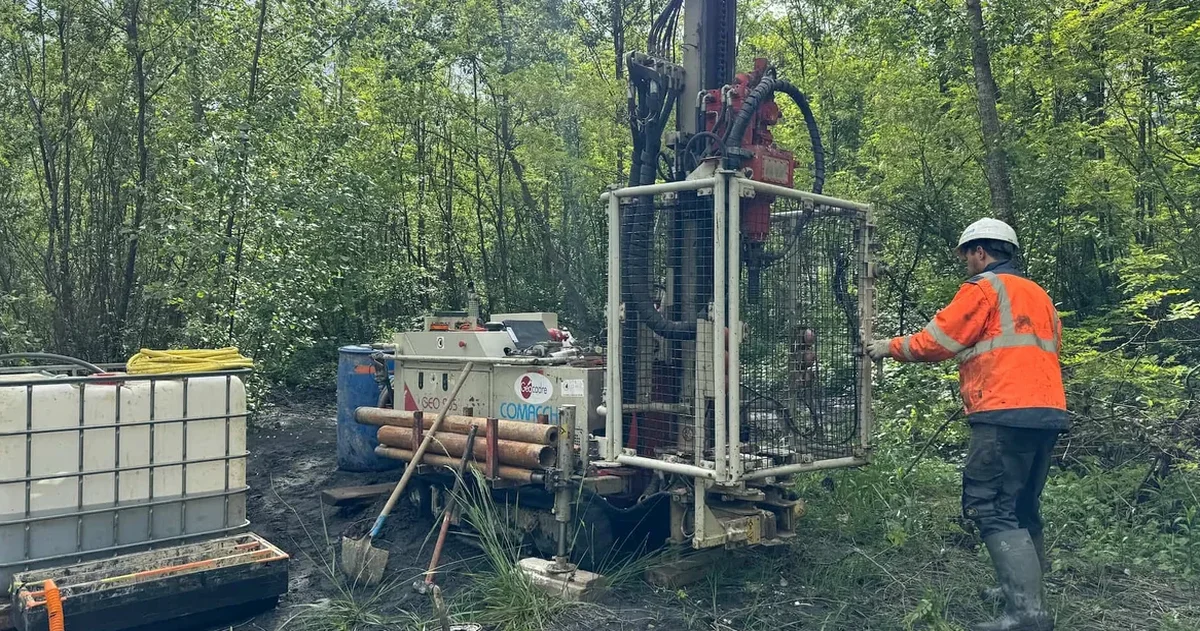
Scope of work in Cleveland
Typical technical challenges in Cleveland
Compare the bedrock‑shallow till of the West Park neighborhood with the deep alluvial deposits beneath the Industrial Valley. In West Park, bearing resistance is rarely the issue — but excavation stability in dense till demands careful shoring design because the material stands on steep cuts until it suddenly slabs off. Down in the Flats, soft to medium clays and uncontrolled fill create settlement risks that can drag on for years if secondary compression is ignored. A soil mechanics study for any project near the Cuyahoga River must quantify consolidation settlement and check for organic layers that generate methane. Skipping this step has led to differential settlement in warehouse slabs and utility trenches, requiring costly underpinning later.
Our services
Each soil mechanics study we deliver in Cleveland includes a site‑specific laboratory program calibrated to the project’s geotechnical risk. The two core packages below cover the most frequent demand in the region.
Foundation Soil Characterization Package
Combines SPT‑based field logging with triaxial CU tests and consolidation curves. Designed for shallow and deep foundation design in glacial till and lacustrine sequences. Includes bearing capacity and settlement calculations referenced to IBC presumptive values.
Pavement Subgrade Evaluation
CBR testing, Proctor compaction, and grain‑size distribution for flexible and rigid pavement sections. We test both natural subgrade and chemically stabilized mixes used in Cleveland DOT‑spec projects.
Quick answers
What does a soil mechanics study in Cleveland typically cost?
For a single‑family or light commercial project, a soil mechanics study with lab testing runs between US$2,740 and US$5,800. The range depends on the number of boreholes, depth of sampling, and the lab suite requested — triaxial and consolidation tests are more expensive than index tests, but they often reduce foundation overdesign.
How many soil layers does a typical Cleveland study analyze?
Most projects in Cuyahoga County encounter three to five distinct layers: topsoil or fill, a soft to stiff lacustrine clay or silt, a dense glacial till, and eventually shale bedrock. We log and sample each layer separately because strength and compressibility can change sharply within a few feet.
Do you test for pyrite or sulfate in Cleveland soils?
Yes, when the site sits on fill derived from Ohio shale or industrial waste. We run modified sulfate soundness tests and pH measurements because acid‑sulfate weathering can attack concrete and steel within 20 years if not identified early.
How long does the laboratory phase take after field sampling?
Standard index tests (moisture content, Atterberg limits, grain size) are reported within 5 to 7 business days. Triaxial and consolidation suites add 10 to 14 business days due to staged loading and pore pressure equalization. We can expedite when the contractor needs bearing values before excavation starts.