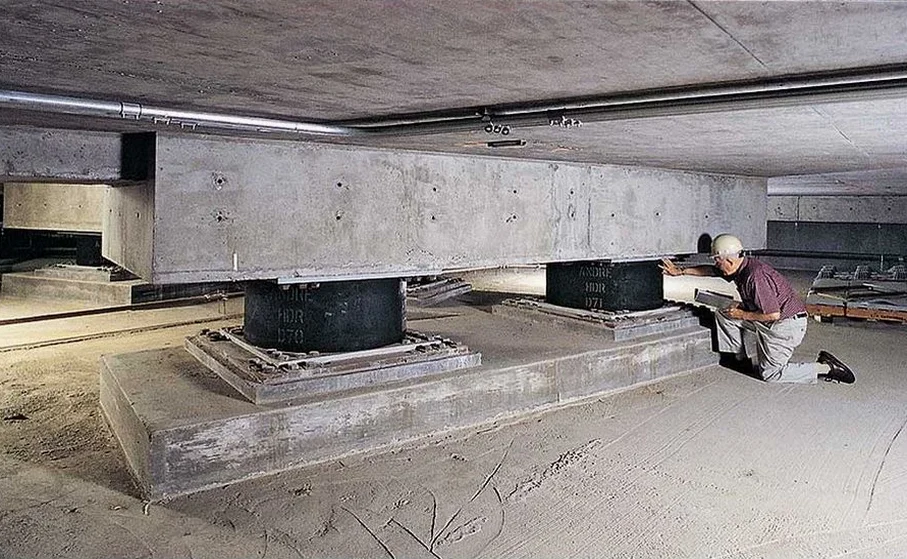
Seismic engineering in Cleveland, Ohio, encompasses a specialized set of geotechnical and structural disciplines focused on safeguarding buildings, infrastructure, and communities against earthquake-induced forces. While the region is not typically associated with high seismicity like the West Coast, Cleveland lies within the New Madrid Seismic Zone's broader influence and experiences moderate seismic hazard from both distant and local sources. This category addresses critical concerns such as ground shaking amplification, soil-structure interaction, and the potential for soil liquefaction along the Lake Erie shoreline. As urban development intensifies with taller structures and aging infrastructure, integrating seismic resilience into design has become an essential component of responsible engineering practice in Northeast Ohio. Services like base isolation seismic design are increasingly evaluated for critical facilities to mitigate these risks.
The local geology of Cleveland presents unique challenges that amplify seismic vulnerability. The city is underlain by glacial till, lacustrine clays, and soft sedimentary deposits from ancestral Lake Erie, which can significantly modify ground motion characteristics during an earthquake. These unconsolidated soils are prone to amplification of seismic waves, increasing the intensity of shaking at the surface compared to bedrock sites. Additionally, the presence of saturated, loose sandy layers in areas like the Cuyahoga River Valley and near the lakeshore raises the potential for soil liquefaction, a phenomenon where soil temporarily loses strength and behaves like a liquid. Understanding these subsurface conditions through detailed seismic microzonation studies is vital for accurately predicting site-specific hazards and informing foundation design.
Regulatory compliance for seismic design in Cleveland is governed by a combination of national standards and local building codes. The primary reference is the International Building Code (IBC), which is adopted and enforced by the City of Cleveland's Department of Building and Housing. The IBC relies on seismic hazard maps from the American Society of Civil Engineers' ASCE 7 standard, specifically ASCE 7-22, which defines spectral response accelerations for short and long periods based on the site's location and soil class. Ohio does not have a separate, more stringent state seismic code, so the IBC and its referenced standards, including the Ohio Building Code which amends the IBC, dictate the required level of seismic analysis and detailing. Geotechnical investigations must comply with these provisions, often requiring site-specific ground motion analyses for structures in Seismic Design Category C or higher, which can apply to essential facilities and taller buildings in Cleveland.
A wide array of project types in the Cleveland metropolitan area necessitates comprehensive seismic services. Healthcare facilities, including the major hospital expansions at the Cleveland Clinic and University Hospitals, demand enhanced seismic resilience to remain operational after an event, often triggering the need for advanced analysis like soil liquefaction analysis. High-rise residential and commercial towers in downtown Cleveland, as well as critical infrastructure such as bridges, water treatment plants, and energy facilities along the lakefront, must account for long-period ground motions and soil-structure interaction. Even the renovation of historic masonry structures, common in neighborhoods like Ohio City and Tremont, requires seismic evaluation and retrofitting strategies to preserve cultural heritage while ensuring public safety. Our integrated approach ensures that from preliminary site characterization to final design, every project meets the stringent demands of modern seismic codes and best practices.
Quick answers
Is Cleveland at a high risk for earthquakes compared to California?
No, Cleveland is classified as a moderate seismic hazard zone, unlike the high seismicity of California. The area is influenced by the New Madrid Seismic Zone and local faults, but large, damaging earthquakes are rare. However, the city's soft glacial soils can amplify ground shaking from distant events, making site-specific analysis crucial for critical structures and code compliance under ASCE 7-22.
What building code governs seismic design in Cleveland, Ohio?
Seismic design in Cleveland follows the International Building Code (IBC) as adopted and amended by the City of Cleveland. It specifically references ASCE 7-22 for determining seismic hazard parameters based on location and soil class. The Ohio Building Code provides further amendments. Projects must adhere to these standards for structural design, geotechnical investigation, and foundation engineering.
When is a site-specific seismic hazard analysis required for a Cleveland project?
A site-specific analysis is typically required for structures assigned to Seismic Design Category C, D, or higher, which includes essential facilities like hospitals, tall buildings, and critical infrastructure. It is also necessary when site soil conditions indicate potential for liquefaction or significant amplification, as determined by a preliminary geotechnical investigation per IBC and ASCE 7 guidelines.
How do local soil conditions in Cleveland affect earthquake shaking?
Cleveland's subsurface consists largely of glacial till, lacustrine clays, and soft lakebed deposits. These unconsolidated soils can amplify seismic waves, increasing ground motion intensity compared to bedrock. In areas with saturated sandy soils, such as near the Cuyahoga River or Lake Erie, there is also a risk of soil liquefaction, which can severely compromise foundation stability during an earthquake.