Ground improvement in Cleveland is a critical geotechnical discipline that transforms weak or compressible soils into competent ground capable of supporting structures, pavements, and infrastructure. As a city shaped by its industrial heritage and Great Lakes shoreline, Cleveland presents a patchwork of subsurface conditions—from natural lakebed clays to undocumented fill—that routinely demand engineered ground treatment. The category encompasses a range of techniques including stone column design, rigid inclusions, deep soil mixing, and vibrocompaction design, each selected to match specific soil profiles and performance criteria. Without proper ground improvement, projects face excessive settlements, bearing capacity failures, and liquefaction risks that can delay construction and escalate long-term maintenance costs.
Cleveland's geology is dominated by glacial and post-glacial deposits overlying Devonian shale bedrock. Much of the downtown and near-lake areas are underlain by lacustrine clays and silts deposited by ancestral Lake Erie, often interbedded with loose sands and organic layers. These soft soils can extend 30 to 60 feet deep before reaching competent till or shale, creating challenges for shallow foundations. In the Flats and older industrial corridors, decades of filling with slag, ash, dredge spoils, and demolition debris have produced highly variable ground with pockets of low density and high compressibility. The combination of natural soft soils and anthropogenic fill makes ground improvement not merely an option but a necessity for achieving reliable foundation performance in many Cleveland neighborhoods.
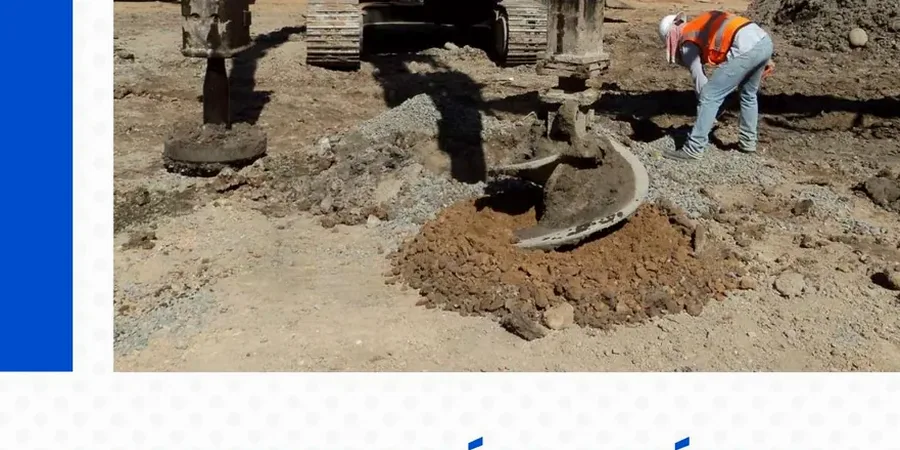
Ground improvement work in Cleveland must comply with the Ohio Building Code, which references the International Building Code and ASCE 7 for seismic and geotechnical design, alongside local amendments enforced by the City of Cleveland Division of Building and Housing. The 2024 OBC requires site-specific geotechnical investigations per Section 1803, with ground improvement designs meeting performance-based criteria for bearing capacity, total and differential settlement, and, where applicable, seismic ground motion. Ohio EPA also governs any injection of grouts or materials that could interact with groundwater, particularly in the Lake Erie watershed and areas with existing contamination. For federally funded infrastructure, FHWA guidelines on ground modification, such as FHWA-NHI-16-027, provide additional technical standards that Cleveland engineers routinely adopt.
The types of projects requiring ground improvement in Cleveland span transportation infrastructure, commercial development, industrial facilities, and waterfront resilience. Interstate bridge widenings and ODOT roadway embankments over soft soils often rely on prefabricated vertical drains, lightweight fills, or deep mixing to control settlement and stability. Large-footprint warehouses and data centers in the eastern suburbs use vibrocompaction design to densify loose sands and reduce liquefaction potential. Urban infill projects in Ohio City and downtown frequently turn to stone column design to support mid-rise structures on marginal ground without deep piling, while port and shoreline stabilization works demand rigorous treatment to resist erosion and wave loading. In every case, the chosen ground improvement method must address Cleveland's freeze-thaw cycling, fluctuating lake levels, and the legacy of past land uses that shape today's subsurface.
Available services
Quick answers
What is ground improvement and when is it needed in Cleveland?
Ground improvement is the modification of in-situ soils to enhance engineering properties such as strength, stiffness, and permeability. In Cleveland, it is typically needed when site investigations reveal soft lacustrine clays, loose fill, or high groundwater that cannot adequately support proposed loads without excessive settlement or bearing capacity failure.
How do local soil conditions in Cleveland influence the choice of ground improvement method?
Cleveland's glacial lakebed clays, interbedded silts, and industrial fill require methods tailored to fine-grained or variable soils. Vibrocompaction suits granular fills and loose sands, while stone columns and deep mixing work better in cohesive clays. The depth to shale bedrock and presence of organics further narrow the feasible techniques for each site.
What regulations govern ground improvement design and construction in Cleveland?
The Ohio Building Code governs most projects, requiring geotechnical investigations and performance-based improvement designs. Ohio EPA regulates material injection near groundwater, and FHWA guidelines apply to federally funded infrastructure. City of Cleveland permits and inspections ensure compliance with these codes and local stormwater management requirements.
How long does ground improvement typically take, and does it affect project schedules?
Duration varies by method and site size, ranging from a few days for small vibrocompaction jobs to several weeks for deep mixing on large sites. While ground improvement adds an upfront phase, it often shortens overall schedules by eliminating deep foundations and reducing earthwork, especially when early geotechnical input streamlines design.