On Cleveland's near-west side, we consistently see foundation investigations reveal a complex stratified profile that shallow footings simply cannot manage. The interbedded glacial tills and soft lacustrine silts deposited by ancestral Lake Erie create a load-bearing puzzle that demands a pile foundation design tailored to the site's specific stratigraphy. You do not guess at pile length here. A comprehensive subsurface exploration with spt-drilling becomes essential to quantify the undrained shear strength of deep cohesive layers, and we frequently correlate this data with cpt-test soundings to map the transition into competent shale bedrock. The challenge is not just depth; it is the erratic nature of the deposits. Our design process accounts for downdrag forces in compressible fill zones and the potential for softening at the pile-soil interface, ensuring the selected pile type performs reliably through Cleveland's freeze-thaw cycles and variable water table fluctuations.
Cleveland's layered glacial stratigraphy demands pile design based on site-specific load transfer curves, not regional presumptive values.
Scope of work in Cleveland
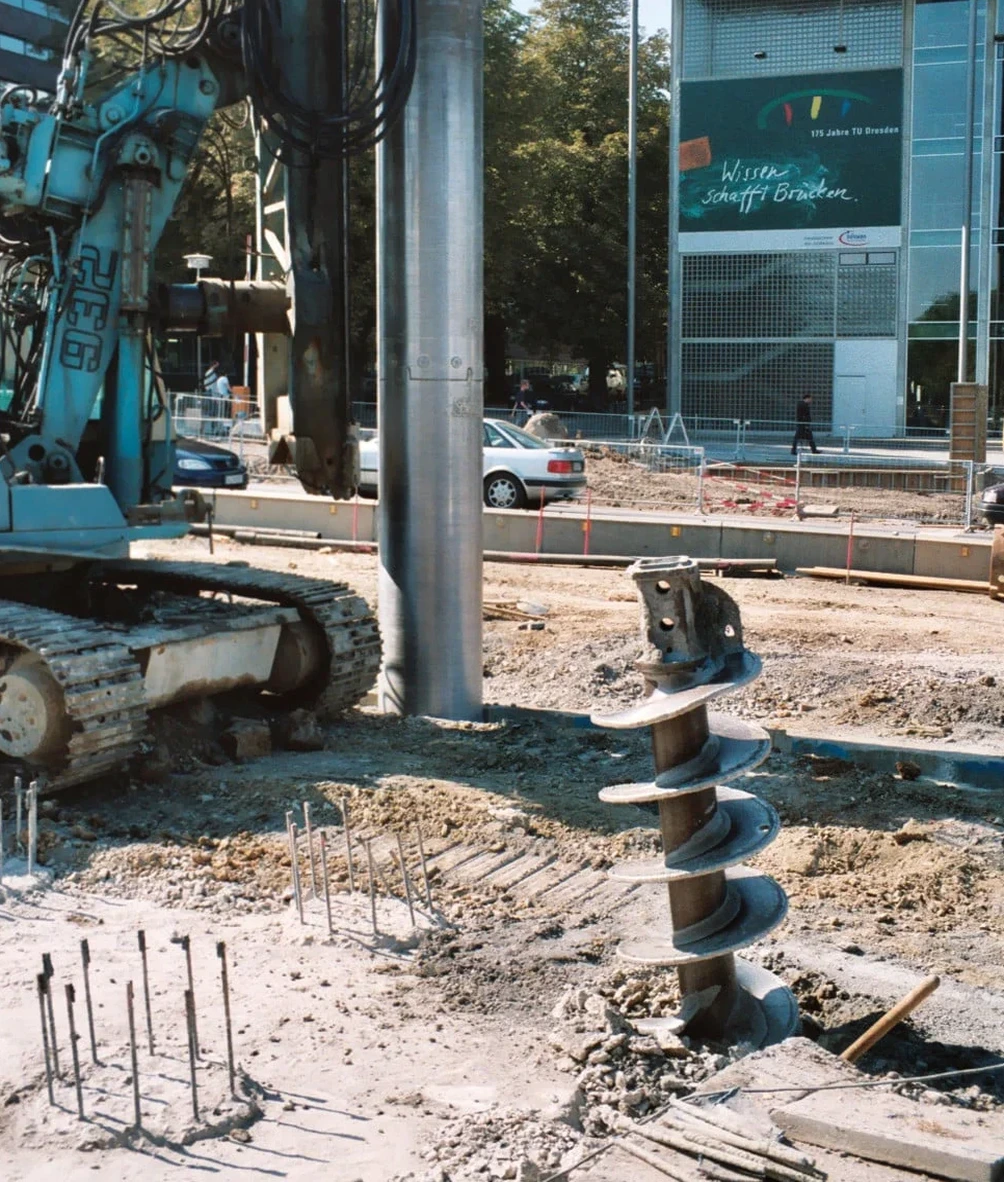
Typical technical challenges in Cleveland
A twelve-story residential tower in the Flats faced a serious design revision when the initial test borings missed a thin, water-bearing silt seam at 40 feet. The original pile foundation design assumed a dry excavation and full skin friction in the lower strata. During construction, artesian pressure from the confined aquifer caused base heave in the drilled shafts, compromising the end-bearing component. This scenario forced an emergency redesign to extend the piles deeper into the shale and incorporate a permanent casing through the unstable zone. The risk in Cleveland is rarely about a single weak layer; it is the abrupt transition between stiff till and soft clay pockets that can induce differential settlement. Ignoring the pore pressure regime in a pile foundation design invites costly change orders and structural distress. Our approach mandates piezometer readings during the exploration phase and a downdrag analysis where fill thickness exceeds 10 feet, protecting the structure from long-term settlement that even the best pile caps cannot absorb.
Our services
We deliver a complete pile foundation design package that covers the full lifecycle of the deep foundation system, from initial concept through construction oversight. Our documentation provides clear recommendations that Cleveland's structural engineers and contractors can execute without ambiguity.
Axial and Lateral Capacity Analysis
We compute shaft resistance and end-bearing using empirical methods calibrated to Cleveland's soil parameters, including alpha and beta methods in cohesive layers. Lateral response is modeled using p-y curves for layered profiles, accounting for the stiff response of near-surface clay crusts that influence pile head deflection under seismic and wind loads.
Pile Integrity and Dynamic Testing
We coordinate high-strain dynamic testing and cross-hole sonic logging to verify shaft integrity and confirm design assumptions. The data we collect during restrike allows us to evaluate setup effects in Cleveland's silty clays, optimizing the final pile length and avoiding unnecessary steel tonnage.
Quick answers
What type of pile is most suitable for Cleveland's soil conditions?
Drilled shafts socketed into Chagrin Shale are common for high-capacity applications, but driven H-piles can be effective where the bedrock is shallow and vibration is not a constraint. The choice depends on the presence of urban fill, the water table, and the proximity to adjacent structures. We recommend a site-specific feasibility study because what works in the Heights may not be appropriate for a site near the lakefront bluffs.
How much does a pile foundation design cost in Cleveland?
The fee for a complete pile foundation design package in Cleveland typically ranges from US$1,770 to US$6,030. The final cost depends on the number of piles, the complexity of the load cases, and whether additional field testing like static load tests or PDA monitoring is required during the design phase.
How do you address downdrag in Cleveland's urban fill?
Downdrag is addressed by quantifying the settlement of the surrounding compressible layers relative to the pile. We apply neutral plane analysis and, where necessary, specify a bitumen coating or a permanent casing through the settling zone. This is critical in areas like the Flats where thick organic silts and undocumented fill can impose significant negative skin friction.
What is the typical depth to competent bedrock for pile support?
Competent Chagrin Shale is typically encountered between 30 and 80 feet below ground surface across the Cleveland metro area. However, the weathered upper zone of the shale often requires deeper socketing to achieve the design end-bearing pressure. We use rock coring and unconfined compression tests to confirm the rock quality designation before finalizing the tip elevation.