Slope stability and retaining structures are fundamental to safe development across Cleveland and Northeast Ohio. This category encompasses the analysis, design, and remediation of natural and engineered slopes, as well as walls that retain soil, rock, or other materials. From the shale bluffs along the Cuyahoga River to the steep embankments of interstate highways, our region presents unique geotechnical challenges that demand specialized expertise. Understanding how soils behave under local conditions is critical to preventing landslides, erosion, and structural failures that can threaten property and public safety.
Cleveland's geology is dominated by glacially deposited tills, lacustrine silts and clays from ancestral Lake Erie, and underlying Devonian shale bedrock. These materials exhibit complex strength and drainage characteristics. The lake effect climate, with its freeze-thaw cycles and seasonal heavy rainfall, further complicates slope behavior by increasing pore-water pressures and triggering instability. Design in this region must account for soft, compressible soils, potential for rapid drawdown conditions along waterways, and the long-term creep of overconsolidated clays on valley walls. A thorough slope stability analysis is often the first step in quantifying these risks.
Geotechnical practice in Ohio must comply with the Ohio Building Code, which references national standards such as those from ASCE and ACI, alongside local city of Cleveland engineering regulations. For earth retention, designs typically follow FHWA guidelines for mechanically stabilized earth (MSE) walls and AASHTO LRFD specifications for transportation projects. The Ohio EPA also governs erosion and sediment control, particularly when work disturbs slopes near waterways or wetlands. Adherence to these standards ensures that retaining wall design not only meets safety factors but also integrates properly with site drainage and environmental protections.
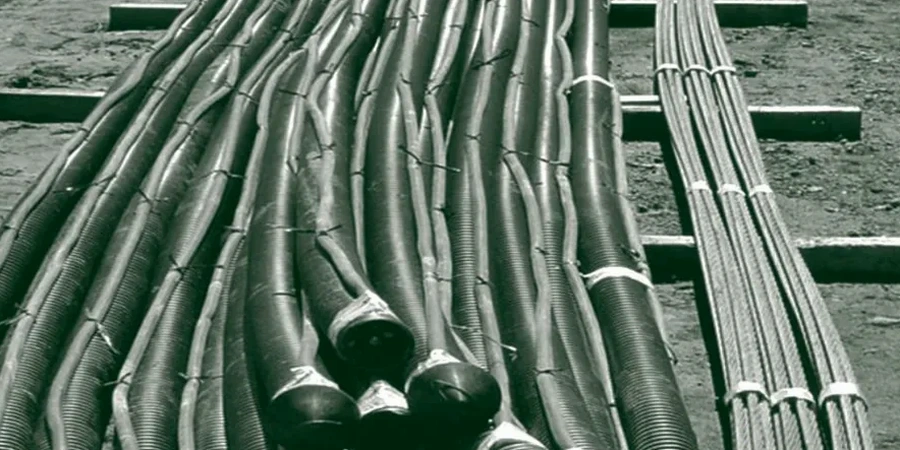
Projects requiring these services range widely. Residential developers on the Heights' hillsides need cantilevered or anchored walls to create buildable lots. Public agencies managing the Metroparks or ODOT rights-of-way rely on engineered solutions to stabilize aging cut slopes and prevent rockfall. Industrial facilities along the Cuyahoga River often require deep excavation support and permanent tied-back walls to maximize usable waterfront space. For deep excavations or structures on challenging terrain, incorporating active/passive anchor design becomes essential, providing the necessary lateral restraint where space is limited or loads are high. Whether it's a temporary sheet pile system or a permanent soil nail wall, the underlying principles of soil-structure interaction remain paramount.
Quick answers
What are the most common causes of slope failures in Cleveland?
In Cleveland, slope failures are typically triggered by elevated pore-water pressure from heavy rain or snowmelt saturating glacial till and lacustrine soils. The cyclic freeze-thaw weathering of shale bedrock, erosion at the toe of slopes by rivers or streams, and human activities like improper grading or drainage alteration are also major contributors. Undercutting by the Cuyahoga River and its tributaries remains a persistent natural cause.
When is a retaining wall required instead of a simple slope?
A retaining wall becomes necessary when a stable slope angle cannot be achieved due to space constraints, or when grade changes exceed what the in-situ soil can support without failure. This is common in urban Cleveland lots, highway widenings, and waterfront developments. Walls are also used to protect existing structures from lateral soil movement or to create level areas for foundations on hillside properties.
What does a typical slope stability analysis involve?
A thorough slope stability analysis involves a geotechnical site investigation with borings to characterize soil and rock layers, laboratory testing to determine shear strength parameters, and modeling of groundwater conditions. Engineers then use limit equilibrium or finite element methods to calculate the factor of safety under static and seismic conditions, often evaluating multiple potential failure surfaces to identify the most critical scenario.
How do local building codes affect retaining wall design in Ohio?
In Ohio, the state building code requires retaining walls to be designed for safety against sliding, overturning, and bearing capacity failure. Designs must follow recognized standards like AASHTO or FHWA guidelines, depending on the project. The city of Cleveland also requires permits for walls over a certain height, with reviews ensuring proper drainage provisions to prevent hydrostatic buildup, which is a common failure mode in our clay-rich soils.