In Cleveland, the integrity of any structure begins below ground. The 'Foundations' category encompasses the critical engineering discipline of designing, analyzing, and constructing the subsurface elements that transfer structural loads safely to the underlying earth. This is far more than simply pouring concrete; it involves a deep understanding of soil mechanics, structural behavior, and local geology to ensure long-term stability and prevent differential settlement, cracking, or catastrophic failure. For a city with a rich industrial past and a diverse architectural landscape, from century-old homes to modern commercial towers, a properly engineered foundation is the non-negotiable baseline for safety and durability.
Cleveland's geological profile presents a unique set of challenges that demand specialized local expertise. The region is characterized by a complex layering of glacial tills, lakebed sediments, and underlying shale bedrock, all influenced by the proximity to Lake Erie. Soft, compressible clay soils and loose silts are common, particularly in areas near the Cuyahoga River Valley and the lakefront. These conditions can lead to significant settlement issues and possess low bearing capacity. Furthermore, the variable depth to competent bedrock, often Devonian-age Ohio Shale, means a one-size-fits-all approach is impossible. A thorough geotechnical investigation is essential to navigate these subsurface risks.
All foundation work in Cleveland must strictly adhere to the provisions of the Ohio Building Code (OBC), which is based on the International Building Code (IBC) with state-specific amendments. Chapter 18 of the OBC governs soils and foundations, setting stringent requirements for geotechnical investigations, allowable bearing pressures, lateral earth pressures, and foundation depth to resist frost heave, which in Cuyahoga County is a minimum of 42 inches below grade. The designs must also comply with the American Concrete Institute's ACI 318 standard for structural concrete and the specifications of the American Society of Civil Engineers (ASCE 7) for minimum design loads. These legal frameworks ensure that every foundation, whether for a single-family home or a high-rise, meets rigorous safety and performance thresholds.
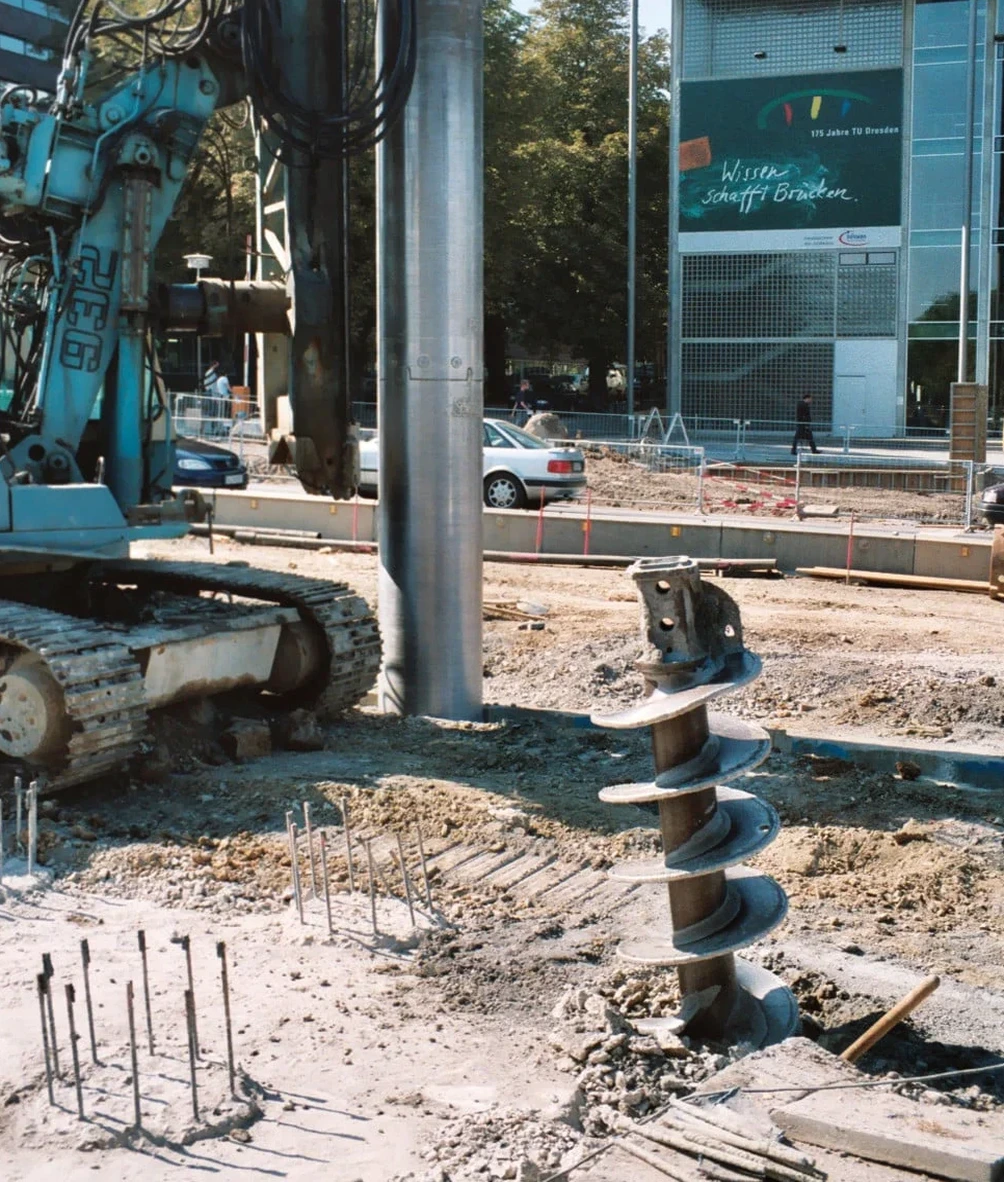
The need for professional foundation engineering is universal across project types, but the specific solution varies dramatically. A custom home on a challenging lakefront bluff with unstable slopes requires a different strategy than a warehouse on a flat, inland site. For heavy commercial and industrial structures, or where surface soils are inadequate, a deep foundation solution using piles is often mandated to bypass weak strata and transfer loads directly to the competent bedrock or a dense till layer. Similarly, infrastructure projects, bridge piers, and even large residential additions on poor ground demand a sophisticated approach beyond standard shallow footings to guarantee performance over decades.
Available services
Quick answers
Why is a geotechnical investigation mandatory before designing a foundation in Cleveland?
A geotechnical investigation is mandated by the Ohio Building Code to identify the highly variable local soil conditions, such as soft lakebed clays or glacial tills. It determines the soil's bearing capacity, compressibility, and the depth to bedrock, which is essential for predicting settlement and selecting the correct foundation type, be it a shallow footing or a deep pile system, to prevent future structural failure.
What is the required foundation depth in Cleveland to prevent frost heave?
Per the Ohio Building Code, the required foundation depth to protect against frost heave in Cuyahoga County is a minimum of 42 inches below the finished exterior grade. This depth places the footing below the typical frost penetration line, preventing the freeze-thaw cycle of moisture in the soil from lifting and cracking the foundation walls and footings during Cleveland's harsh winters.
When are deep foundations like piles necessary instead of standard concrete footings?
Deep foundations are necessary when near-surface soils lack sufficient bearing capacity to support the structural loads, a common issue in Cleveland's lakefront and river valley areas with thick deposits of soft clay and loose fill. Piles are designed to bypass these weak layers and transfer the building's weight down to a more competent stratum, such as dense glacial till or the underlying shale bedrock.
What are the signs that an existing foundation in a Cleveland home might be failing?
Common indicators of a failing foundation include sticking doors or windows, diagonal cracks extending from corners of walls, a visibly bowing basement wall, or a chimney that is separating from the main structure. In Cleveland, these issues are often caused by differential settlement due to the consolidation of soft underlying soils or lateral pressure from saturated clay backfill, and they warrant an immediate structural assessment.