In-situ testing forms the backbone of geotechnical site characterization in Cleveland, providing direct measurements of soil and rock properties without the disturbance associated with sample extraction and laboratory testing. This category encompasses a range of field investigation methods designed to evaluate subsurface conditions in their natural state, including strength, density, permeability, and deformation characteristics. For a city built on complex glacial deposits and weathered shale bedrock, these tests deliver the reliable data engineers need to design foundations, retaining structures, and earthworks that perform safely over the long term.
Cleveland's subsurface profile presents unique challenges that make in-situ testing particularly critical. The region is underlain by sequences of glacial tills, lacustrine clays, and silts deposited during multiple Pleistocene advances and retreats, often interbedded with sand and gravel lenses. Beneath these unconsolidated deposits lies the Devonian-age Ohio Shale, which can be highly variable in its degree of weathering and strength. The depth to bedrock across the Greater Cleveland area ranges from near-surface along the Lake Erie shoreline to over 150 feet in buried valleys, creating abrupt transitions that demand careful field verification. Seasonal groundwater fluctuations and the presence of soft, compressible lacustrine clays in low-lying areas further necessitate accurate field measurements.
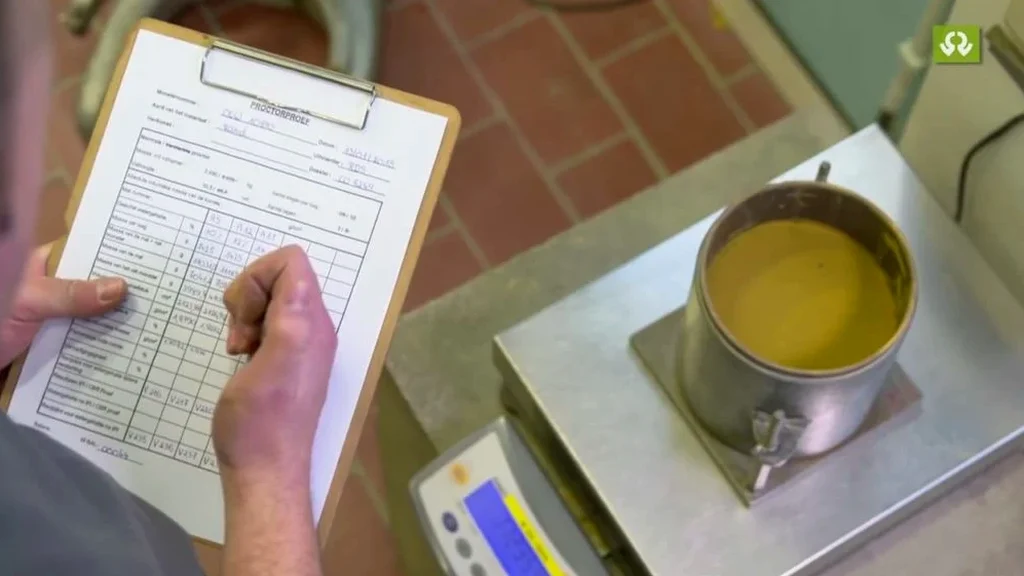
In-situ testing protocols in Cleveland must conform to standards established by ASTM International, with specific test methods referenced in local building codes and Ohio Department of Transportation specifications. The Standard Penetration Test (SPT) remains the most widely used index test, conducted in accordance with ASTM D1586, while Cone Penetration Testing (CPT) per ASTM D5778 has gained significant traction for stratigraphic profiling in the region's fine-grained soils. For compaction control and earthwork verification, the field density test (sand cone method) per ASTM D1556 is routinely specified by Cleveland building officials and geotechnical engineers to confirm that structural fill and pavement subgrades meet project density requirements. Pressuremeter testing and dilatometer testing are also employed when modulus values are needed for settlement analysis in the city's variable soil profiles.
Projects throughout Cleveland that require comprehensive in-situ testing programs span the full spectrum of construction activity. Major infrastructure initiatives including the Cleveland Harbor deepening project, ODOT highway widenings, and Greater Cleveland Regional Transit Authority expansions rely heavily on field testing to characterize subsurface conditions. Commercial developments in the Flats and University Circle areas, where deep fills and industrial history complicate the ground profile, depend on in-situ data for foundation design. Residential and mixed-use projects on the city's east and west sides, along with brownfield redevelopments throughout Cuyahoga County, require density testing for earthwork quality assurance and bearing capacity verification. Even smaller-scale projects such as retaining wall installations and slope stabilization measures benefit from field vane shear and inclinometer testing to address Cleveland's soft clay stability concerns.
Available services
Quick answers
What is in-situ testing and how does it differ from laboratory testing?
In-situ testing measures soil and rock properties directly in the ground without removing samples, preserving natural stress conditions, moisture content, and fabric. Laboratory testing requires sample extraction, which can cause disturbance, stress relief, and moisture loss. In-situ methods often provide continuous profiles and faster results, while lab tests allow controlled conditions and a wider range of parameters.
Which in-situ tests are most commonly required for Cleveland construction projects?
The Standard Penetration Test (SPT) per ASTM D1586 is the most frequently specified for foundation investigations in Cleveland. Cone Penetration Testing (CPT) is increasingly used for stratigraphic profiling in the region's glacial soils. Field density testing using the sand cone method per ASTM D1556 is standard for earthwork compaction verification on local commercial and residential projects.
How do Cleveland's glacial soils affect in-situ test results?
Cleveland's glacial tills and lacustrine deposits are highly variable, with interbedded layers of clay, silt, sand, and gravel. SPT blow counts can fluctuate dramatically over short depths, and CPT pore pressure dissipation tests may reveal complex drainage behavior. Soft lacustrine clays often yield very low undrained shear strengths in field vane tests, requiring careful interpretation for slope stability and foundation design.
What qualifications should an in-situ testing provider have in Ohio?
Testing firms should employ field personnel certified under applicable programs and operate under the supervision of a Professional Engineer or Professional Geologist licensed in Ohio. Equipment calibration records should follow ASTM standards, and providers must demonstrate experience with Cleveland's specific geological conditions. ODOT prequalification is important for publicly funded transportation projects.