Building in Ohio City versus building in Solon presents two completely different soil challenges. The dense, silty clays near the Cuyahoga River react nothing like the glacial tills found further east. Guessing the bearing capacity here is a costly mistake. We run the Standard Penetration Test to give you hard numbers. An SPT tells you exactly how many blows it takes to drive a sampler through each soil layer. That N-value translates directly into foundation design parameters. For sites with deep soft clays, we often recommend pairing the SPT with a CPT test to get a continuous stratigraphic profile. This dual approach eliminates blind spots that single-method investigations can miss in Cleveland's complex glacial deposits.
An SPT N-value below 4 in Cleveland's lake plain almost always means you need deep foundations or ground improvement. We verify this before the excavator arrives.
Scope of work in Cleveland
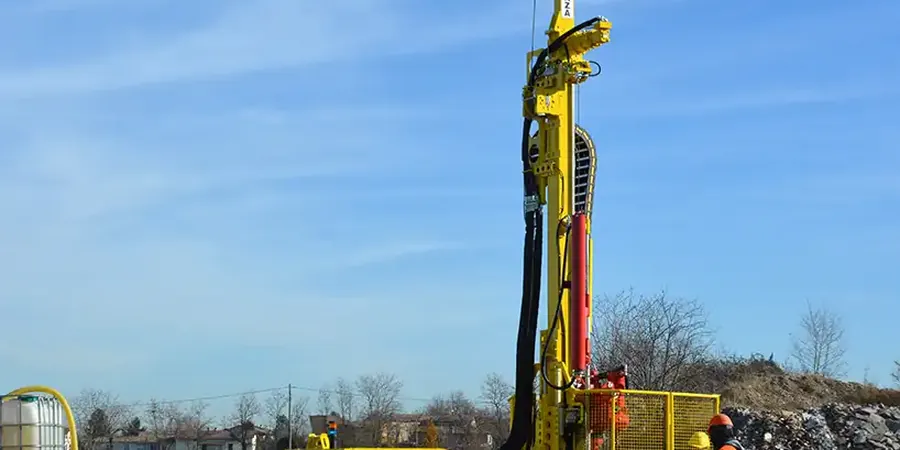
Typical technical challenges in Cleveland
IBC Chapter 18 and ASCE 7 require a geotechnical investigation for every new building. In Cleveland, this isn't just a bureaucratic checkbox. Large portions of the city sit on lacustrine deposits from ancestral Lake Erie. These soft clays can lose up to 60% of their strength when remolded. An SPT with N-values consistently below 2 in the upper 20 feet is a red flag. It points to a liquefaction potential that must be addressed, especially east of Downtown where the water table sits just 6 feet below grade. Skipping this investigation leads to differential settlement. We have seen footings crack within three years on under-consolidated clay. The cost of the SPT is a fraction of the cost of litigation and structural repair. The test gives you a defensible data set that the city building department will accept without question.
Our services
We deliver SPT data that Cleveland engineers and contractors can use immediately. Our reports are clear, our drillers know the local geology, and our turnaround meets construction schedules.
Geotechnical SPT Borings
Truck-mounted and track-mounted drilling rigs for SPT sampling across Cleveland and Cuyahoga County. We handle site access logistics, utility clearance, and traffic control. Every log is prepared by a staff geologist who understands Ohio's glacial stratigraphy.
Foundation Design Parameters Package
We take the raw SPT data and give you allowable bearing capacity, estimated settlement, and lateral earth pressure coefficients. You get direct input for your structural engineer's foundation calculations. No need to interpret the boring logs yourself.
Quick answers
What does an SPT test cost in Cleveland?
A standard SPT boring in Cleveland typically ranges from US$560 to US$760 per hole, depending on the depth and the number of samples required. This includes the drilling, the split spoon sampling, the field logging, and the final report with N-values. If the hole needs casing to get through fill or if we have to drill deeper than 30 feet, the cost can increase. We always provide a fixed-price proposal before mobilizing.
How deep do you drill the SPT boring in Ohio?
The depth depends on the foundation type and the structure load. For a typical single-family home with a basement, we usually drill to 20 or 25 feet below the planned footing elevation. For a commercial building on spread footings, we often go to 40 or 50 feet. We stop when we hit competent bedrock or when the N-value exceeds 50 blows consistently. The IBC requires us to explore deep enough to capture all soil layers that will experience a stress increase from the foundation.
How long does it take to get the SPT results?
The field work for one or two borings usually takes a single day. You will have the preliminary boring logs with the raw blow counts by the next business day. The final report, which includes the corrected N-values (N60 and N1(60)) and the foundation recommendations, is typically ready within five to seven working days. We can expedite the report if the project is on a tight timeline.
Can you do SPT testing in areas with poor access?
Yes. We have compact track-mounted drill rigs that can pass through a 36-inch gate and work on slopes up to 25 degrees. For sites in Cleveland's older neighborhoods with tight lot lines and overhead utilities, we conduct a pre-drill site visit to plan the rig access and ensure we can set up safely without damaging existing structures or landscaping.